April 17, 2026 · Updated July 22, 2026 · By Mike Flores, Owner
Attic ventilation is one of the most overlooked factors in Houston roofing. A properly ventilated attic can add 5-10 years to shingle life, reduce summer cooling costs by 10-20%, and prevent moisture problems. A poorly ventilated attic bakes your shingles from underneath, cooks your air conditioning, and creates conditions for mold.
What Ventilation Actually Does
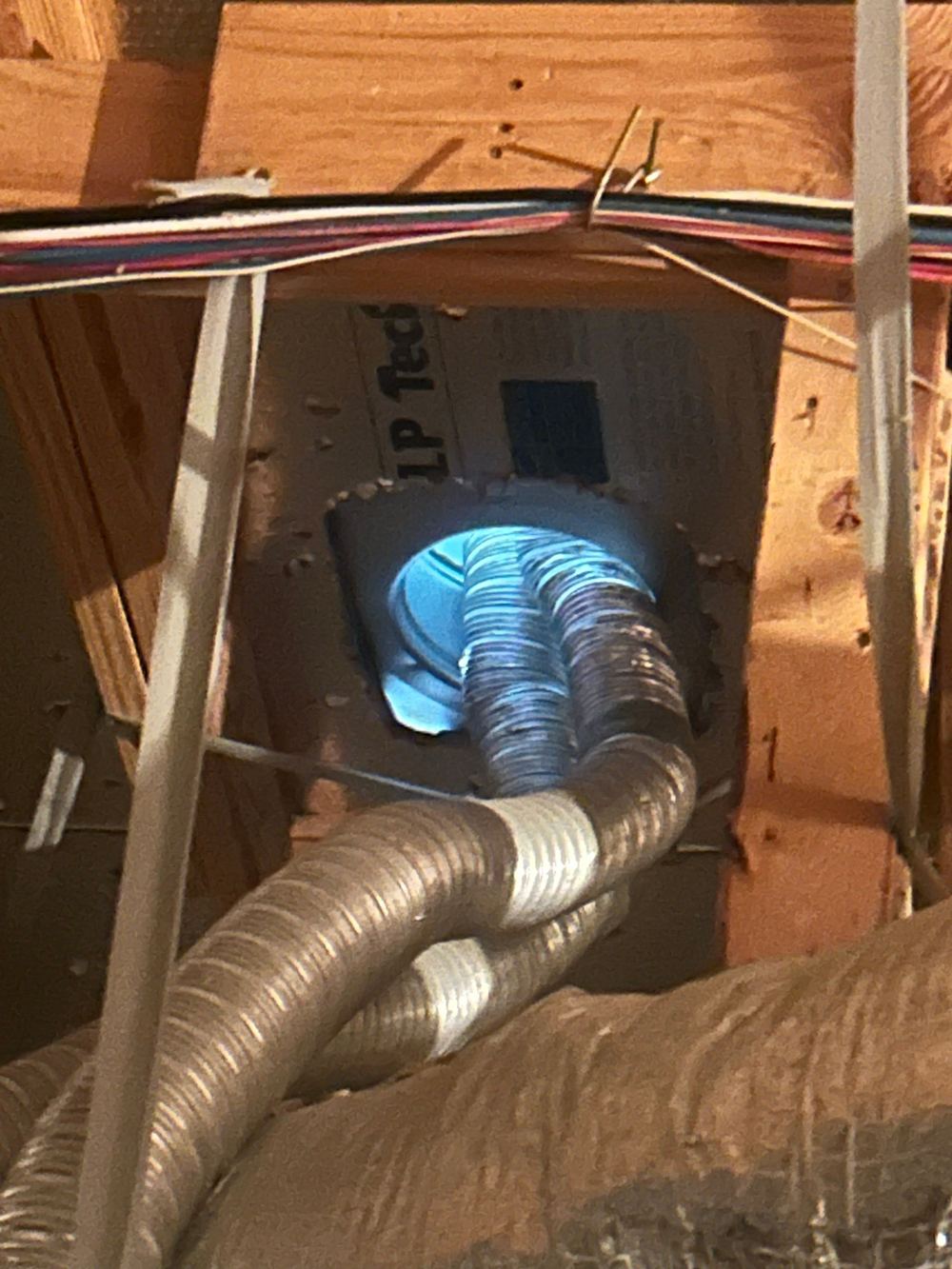
In a correctly ventilated attic, cool outdoor air enters through intake vents at the eaves (soffit vents), rises as it warms, and exits through exhaust vents at the ridge or high in the roof. This continuous airflow does three critical things:
- Removes heat that would otherwise radiate back through the ceiling and into your living space
- Prevents moisture buildup that would cause mold, rot, and insulation damage
- Keeps the underside of the roof deck cool enough that shingles do not cook from below
The system works like a chimney. No fans are required in a passive design — the physics of warm air rising (the stack effect) drives the airflow, as long as intake and exhaust openings are sized correctly and nothing blocks the path between them. That last point matters: the most common ventilation failure we find in Houston attics is not missing vents, but soffit vents blocked by blown-in insulation that has drifted over the openings.
Why Does Ventilation Matter More in Houston Than Most Cities?
Houston combines two conditions that punish under-ventilated attics: extreme summer heat and year-round humidity. Houston attics can reach 140°F to 160°F in summer with inadequate ventilation. At those temperatures, asphalt shingles degrade rapidly, air conditioning units work harder (shortening their life and raising bills), and any moisture in the attic condenses and causes damage. Proper ventilation keeps attic temperatures within 10-20°F of outdoor temperature — still hot, but manageable.
Humidity is the quieter half of the problem. Gulf Coast air carries enormous amounts of water vapor, and everyday household activities — showers, cooking, laundry — push even more moisture up into the attic. In a sealed, stagnant attic that moisture has nowhere to go. It condenses on the underside of the roof deck, soaks into insulation (cutting its effectiveness), and feeds mold on framing lumber. Continuous airflow carries that moisture out before it can settle, which is why ventilation is as much a moisture-control system as a heat-control system in this climate.
How Does Poor Ventilation Damage a Roof From Below?
Heat and moisture attack an under-ventilated roof from the underside long before anything is visible from the street. Asphalt shingles are engineered to handle sun on their top surface, but sustained high temperatures from below accelerate the loss of the oils that keep shingles flexible. The result is premature curling, cracking, and granule loss — a 25-year shingle behaving like a 15-year shingle. Trapped moisture compounds the damage: plywood decking delaminates when repeatedly dampened, nails back out as wood swells and shrinks, and rusting fasteners lose their grip. Several shingle manufacturers treat inadequate ventilation as grounds to reduce or deny warranty coverage, which means poor airflow can cost you twice — once in roof life, and again in lost warranty protection.
How to Tell If Your Ventilation Is Inadequate
Signs of poor attic ventilation include:
- Attic feels dramatically hotter than outside in summer
- Ice dams (in unusual cold snaps), though rare in Houston
- Moisture, mold, or mildew on the attic side of the roof deck
- Wet insulation or condensation dripping from roof deck in winter
- Shingles aging faster than expected for their age (premature curling, granule loss)
- High cooling bills with no other explanation
- Visible soffit vents that are painted over, blocked by insulation, or missing entirely
A simple homeowner check: on a hot afternoon, open the attic hatch and hold your hand near it. A blast of oven-like air suggests heat is accumulating rather than moving through. From outside, walk the eaves and confirm you can actually see open soffit vents — then, in the attic, verify daylight or airflow at those same locations. If the soffits look vented from the street but no air moves inside, insulation is almost certainly blocking them.
The Balanced Ventilation Formula
Proper ventilation requires balanced intake and exhaust. The standard formula is 1 square foot of Net Free Vent Area (NFVA) per 300 square feet of attic floor space, split evenly between intake and exhaust. For a typical 2,000 sq ft home attic, that works out to about 6.67 sq ft of total venting — 3.33 sq ft of intake and 3.33 sq ft of exhaust.
Common exhaust options include ridge vents (most effective), box vents, power vents, and turbines. Intake is almost always soffit vents along the eaves. Properly designed systems use only one type of exhaust — mixing types (ridge + box, for example) creates short-circuits that reduce effectiveness. If you must err in one direction, slightly more intake than exhaust is the safe side; exhaust without adequate intake can pull conditioned air out of the house or draw rain-laden air in through the exhaust vents themselves.
Which Attic Ventilation Type Is Best for a Houston Home?
For most Houston homes, a continuous ridge vent paired with open soffit intake is the best-performing and lowest-maintenance combination. Here is how the common options compare:
| Ventilation Type | Role | How It Works | Best For |
|---|---|---|---|
| Ridge vent | Exhaust | Continuous opening along the roof peak under a vented cap; no moving parts | Most Houston homes with a reasonably long ridge line |
| Soffit vents | Intake | Perforated panels or individual vents under the eaves feed cool air in | Every home — the intake half of any balanced system |
| Box (static) vents | Exhaust | Individual square vents placed near the ridge | Complex or hip roofs with short, interrupted ridge lines |
| Power vents | Exhaust | Thermostat-controlled electric fan actively pulls air out | Large or complicated attics where passive exhaust falls short |
| Turbines | Exhaust | Wind-driven spinning vent; performance depends on breeze | Budget upgrades on homes with good wind exposure |
Ridge Vents vs. Alternatives
Ridge vents: The best solution for most Houston homes. Continuous venting along the entire ridge line, balanced with soffit intake. Invisible from the ground, high performance, no moving parts.
Box vents (static roof vents): The small square vents scattered across a roof. Work adequately but not as efficient as ridge vents.
Power vents: Thermostat-controlled electric fans. Higher performance but require electrical connection and eventual motor replacement.
Turbines: Wind-powered spinning vents. Low cost but performance depends on wind conditions.
Does Better Ventilation Really Lower Cooling Bills?
Yes — in Houston's climate the effect is real, because your air conditioning ductwork and equipment often live in the attic. When the attic sits at 150°F, every foot of duct is running through an oven, and the cool air inside it picks up heat before it ever reaches your rooms. Lowering attic temperature by 20-30°F through proper ventilation reduces that heat gain, shortens AC run times, and eases wear on the compressor. Ventilation will not replace good insulation — the two work together — but of the two, ventilation is usually the cheaper fix and the one more often missing in older Houston homes.
What About Radiant Barriers and Insulation?
Ventilation, insulation, and radiant barriers each solve a different piece of the attic heat problem, and they are complements rather than substitutes. A radiant barrier (reflective foil under the roof deck) reduces the heat radiating down into the attic; insulation slows heat transfer through the ceiling into living space; ventilation removes the heat and moisture that accumulate anyway. Skipping ventilation and relying on the other two leaves moisture with no exit path — a common cause of the moldy roof decks we find during roof repair calls. If you are adding insulation, make sure the installer uses baffles at the eaves so the new insulation does not smother your soffit intake.
Can You Have Too Much or Mismatched Ventilation?
Yes. More holes in the roof is not automatically better airflow. The two most common mistakes we correct on Houston roofs:
- Mixed exhaust types. A ridge vent added above existing box vents (or a power fan running near a ridge vent) lets exhaust vents feed each other instead of pulling from the soffits, short-circuiting the system and leaving the lower attic stagnant.
- Exhaust without intake. Adding a powerful attic fan to a house with blocked soffits creates negative pressure that sucks conditioned air out of the living space through ceiling penetrations — you end up paying to cool the attic.
Not sure what your attic actually has? Call us at (713) 527-2719 and we will include a full ventilation assessment with a free roof inspection — no obligation, and we will tell you plainly if your system is already fine.
When to Upgrade Ventilation
The best time to upgrade ventilation is during roof replacement — it costs an additional $500-$2,000 to add proper ridge venting while the roof is already open and can pay for itself in extended shingle life and reduced cooling bills. If your roof is newer and ventilation is inadequate, targeted upgrades (adding soffit vents, installing ridge vent on a future reroof, adding power vents) can dramatically improve the situation.
If you are planning a replacement, raise ventilation early in the conversation — before shingles are chosen. Vent layout affects how the ridge is cut and capped, and the right time to correct blocked soffits or add intake is while crews and equipment are already on site. Ventilation also pairs naturally with drainage: clean, properly pitched gutters keep water moving off the roof edge where your soffit vents live, which is one reason we look at both during gutter service visits.
During any free roof inspection, we assess attic ventilation as part of the overall roof system evaluation. If your ventilation is inadequate, we will tell you and explain options.
Related Reading
- How Long Should a Roof Last in Houston's Climate? — ventilation is one of the biggest levers on real-world roof lifespan
- Asphalt vs Metal vs Tile: Best Roof Material for Houston — how each material handles Houston heat above the deck
- 10 Signs Your Houston Roof Needs Replacement — premature shingle aging is often a ventilation symptom