July 22, 2026 · By Mike Flores, Owner
Most homeowners think of attic insulation as an energy-bill topic, not a roofing topic. In Houston it is both. The insulation on your attic floor controls how much heat crosses between your living space and the attic, how much moisture accumulates under your roof deck, and — done wrong — whether your ventilation system can work at all. As roofers, we see the results from above: moldy decking over under-ventilated insulation, cooked shingles over heat-trapped attics, and soffit vents smothered by careless blow-in jobs. Here is how insulation and your roof actually interact, and what Gulf Coast homes need.
How Does Attic Insulation Affect the Roof Above It?
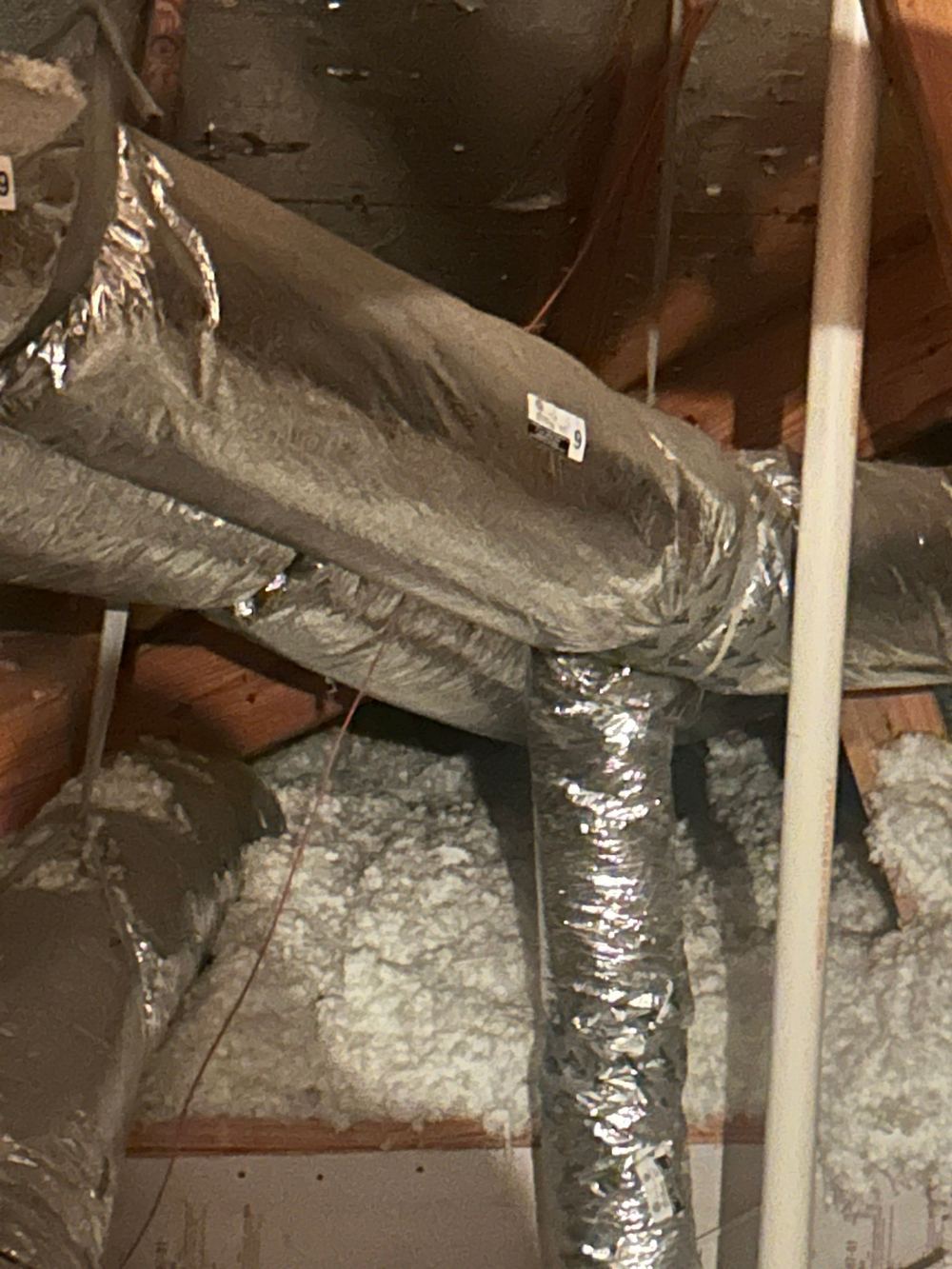
Insulation affects your roof mainly by controlling where heat and moisture end up. In summer — which in Houston is most of the year — the roof absorbs enormous solar heat and radiates it into the attic. Good floor insulation keeps that heat out of your living space; ventilation then flushes it outdoors. In the cooler months the flow reverses: heat and household moisture rise out of the living space, and insulation slows how much reaches the attic.
The roof consequences show up at the extremes. Too little insulation lets conditioned, moisture-laden indoor air leak upward, where humidity condenses on the underside of the roof deck on cool nights — a slow recipe for mold and delaminated plywood. Too much insulation installed badly — piled against the eaves without baffles — blocks soffit intake and shuts down the airflow that attic ventilation depends on. Insulation and ventilation are a system: one controls heat transfer, the other removes what gets through, and the roof deck sits at the mercy of both.
What R-Value Do Houston Homes Actually Need?
Houston sits in one of the mildest climate zones in the country for insulation purposes, and the commonly cited guidance for Gulf Coast attics is roughly R-30 to R-49 — noticeably less than the R-60 targets you will see quoted for northern states. R-value measures resistance to heat flow, and each added inch of material helps less than the one before it, so chasing extreme R-values in a cooling-dominated climate delivers diminishing returns. What matters more here is coverage quality: consistent depth across the whole attic floor, no gaps around can lights and chases, and air-sealing of the ceiling penetrations that let humid indoor air sneak into the attic. Many older Houston homes we inspect have far less than R-30 up there — often a thin, settled layer from original construction — and topping it up is one of the cheaper comfort upgrades a homeowner can make.
Can Insulation Actually Cause Roof Problems?
Yes — not the material itself, but how it is installed. The failures we find during inspections almost always trace to one of these:
- Blocked soffit vents. Blown-in insulation drifts over the eave openings, choking off intake air. The attic overheats, moisture lingers, and shingles age early. Baffles at every rafter bay prevent this.
- Buried moisture. Insulation soaked by a slow roof leak holds water against framing and loses most of its insulating value. Fiberglass may dry; cellulose usually compacts and needs replacement.
- Covered exhaust fans. Bathroom fans that dump into the attic instead of outdoors pump gallons of water vapor into the insulation and onto the deck — a mold generator in Houston humidity.
- Compressed batts. Insulation stuffed or stepped flat performs far below its rated R-value, creating cold spots where condensation forms first.
One Houston-specific reassurance: ice dams — the classic northern insulation failure where attic heat melts snow that refreezes at the eaves — are essentially a non-issue here. Our climate problem is the opposite: keeping heat and humidity moving out of the attic, not keeping the roof edge cold.
Which Insulation Type Is Right for a Houston Attic?
Each common insulation type behaves differently under a Houston roof:
| Insulation Type | Where It Goes | Strengths | Watch Out For |
|---|---|---|---|
| Blown-in fiberglass | Attic floor | Affordable, fills irregular spaces, tolerates humidity well | Drifts over soffit vents without baffles |
| Blown-in cellulose | Attic floor | Good coverage, recycled content, dense air-blocking | Absorbs and holds water if a leak develops |
| Fiberglass batts | Attic floor | DIY-friendly, predictable R-value per layer | Gaps and compression cut real-world performance |
| Open-cell spray foam | Roof deck (sealed attic) | Brings attic ductwork into conditioned space; strong air seal | Changes the whole attic strategy; can hide roof leaks |
| Radiant barrier | Under roof deck | Reflects radiant heat before it enters the attic; pairs with floor insulation | A supplement, not a substitute for R-value |
Should You Insulate the Attic Floor or the Roof Deck?
The traditional approach — insulation on the attic floor, vented attic above — remains the right answer for most existing Houston homes. It is cheaper, easier to inspect, and keeps the roof deck visible so leaks are caught early. The alternative, spray foam on the underside of the roof deck, creates a sealed, semi-conditioned attic. That approach shines when your AC equipment and ducts live in the attic, because they stop operating inside a heat chamber. But it commits you: the attic no longer ventilates, the foam conceals the decking, and a future roof leak can travel unseen along the foam before appearing indoors. If you go the sealed route, disclose it to any roofer bidding future work — it changes how leaks are diagnosed and how decking gets replaced during a reroof. When we run a free roof inspection, we check the attic side precisely because these details decide how long the roof above will last.
How Can You Check Your Own Attic Insulation?
You can learn most of what matters in ten minutes with a flashlight, standing at the attic hatch — no need to crawl the joists. Look for:
- Depth and coverage. If you can see the tops of the ceiling joists poking through the insulation, coverage is thin — well short of Gulf Coast targets. Depth should look even, without bare valleys or wind-scoured patches near the eaves.
- Daylight at the eaves. You should see light or feel airflow at the soffit line. If the insulation runs hard into the roof deck with no gap, the intake vents are likely smothered.
- Stains and dark streaks. Discolored insulation often marks air leaks (dust filtering through) or water paths from above. Dark streaks on the underside of the decking point to moisture — a roofing problem, not an insulation problem.
- Ducts and fans. Confirm bathroom exhaust fans duct all the way outdoors, and note whether your AC ducts sit above or below the insulation layer.
Anything that looks like water damage deserves a professional look from the roof side — wet insulation under a suspect deck usually means an active leak that needs a repair before any insulation work makes sense. And if the shingles above are also curling or shedding granules, compare what you find against the signs a roof needs replacement before spending on the attic.
When Should You Upgrade Insulation — Before or During a Reroof?
If a roof replacement is on your horizon, coordinate the two projects rather than treating them separately. The reroof is the moment when ventilation gets rebuilt — ridge vents cut, soffit intake corrected, ventilation upgrades typically running $500–$2,000 as part of the job — and your insulation plan should match the ventilation plan. Doing insulation first and ventilation second risks paying twice to fix blocked eaves.
The practical sequence: fix any active leaks first (wet insulation defeats the whole exercise), then correct ventilation, then top up insulation with baffles protecting the intake path. If your shingles are aging early — curling, shedding granules ahead of schedule — the attic is a prime suspect, and it is worth a look before you assume the roof itself failed. Questions about what your attic needs? Call us at (713) 527-2719 and we will include an attic and ventilation assessment with your inspection at no charge.
Related Reading
- Why Your Houston Roof Needs Proper Ventilation — the other half of the attic system
- Roof Leaks and Mold in Houston Homes — what happens when attic moisture goes unmanaged
- How Long Should a Roof Last in Houston's Climate? — attic conditions are a top factor in real lifespan